
Basement Bar Ideas That Don't Look Like a Basement
Share
Most basement bars fail for the same reason: they still look like a basement with a bar tacked into the corner. Fix the room first, and the bar takes care of itself.
That's the verdict. Here's how to get there.
The Room Is Working Against You
Basements come with three built-in disadvantages: low ceilings, no natural light, and a concrete shell that reads cold no matter how many string lights you hang. You can't renovate your way out of an 8-foot ceiling, but you also don't have to fight it. The goal isn't to make a basement pretend it's a rooftop lounge. It's to make the low, enclosed feel work in your favor: think den, not dungeon.
That means dropping the instinct to brighten everything with cool white light and going the other direction: warm, layered, a little moody. A basement bar that leans into its own coziness beats one straining to look like it has windows it doesn't have.
Light First, Everything Else Second
Before you buy a single bottle of bourbon or hang a single sign, sort out lighting. One overhead fixture in a basement is an interrogation room. You want three layers: ambient (recessed or a flush mount, dimmed low), task (over the pour station, bright enough to read a label), and accent (a sconce or two aimed at whatever's going on your walls). Warm bulbs only, 2700K, nothing bluer. That single choice does more for the room's mood than any decor purchase you'll make.
Warm Up the Palette
Concrete floors and cinder block walls read as unfinished even when they're technically finished. Counter that with materials that carry heat: wood tones on the bar top and shelving, leather or waxed-canvas on the stools, a rug underfoot even if it feels unnecessary in a room with a bar in it. Dark, saturated wall colors (deep green, charcoal, oxblood) actually help a low-ceilinged room feel intentional instead of cramped. White walls in a basement just show you every flaw in the drywall.
The Wall Is Doing Too Little Work
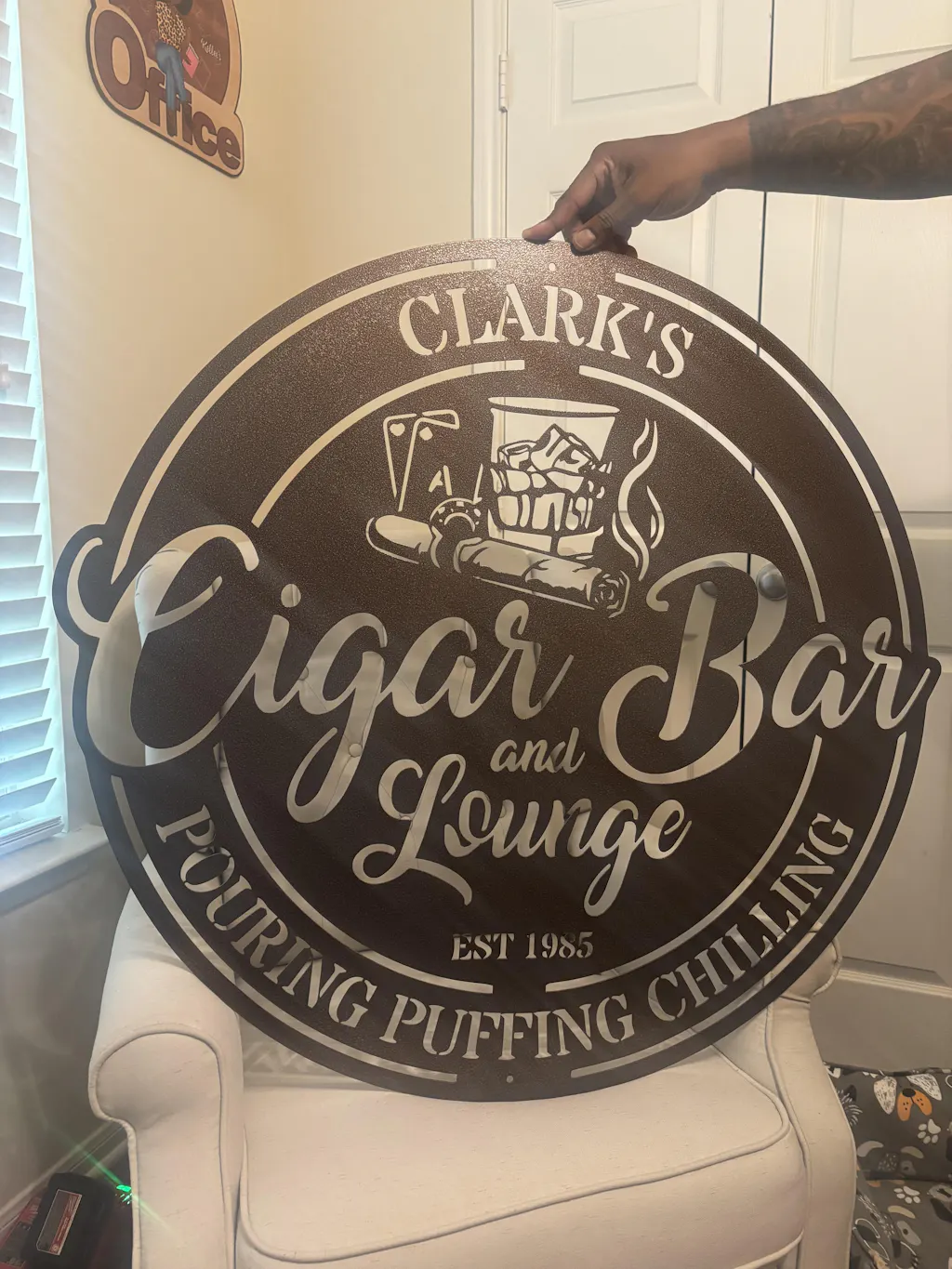
This is where most basement bars quietly give up. There's a bar, some stools, maybe a dartboard, and then a lot of blank cinder block or drywall doing nothing. That wall space is the cheapest, highest-impact fix in the whole room. A framed poster will curl at the edges in basement humidity within a year. Laser-cut steel won't. It also throws a little shadow and texture against flat paint, which is exactly the kind of visual interest a windowless room needs.
Something like a personalized man cave sign, the kind that cuts a whiskey bottle, cigar, and a hand of cards right through the metal, gives the wall a focal point without needing a window behind it. Hang it where the sconce lighting hits it at an angle, not head-on, and you'll get shadow play that a flat poster can't touch.
Zone It Like a Real Bar
A basement is usually one open rectangle, which means the bar, the seating, and the "everything else" (foosball table, TV, storage) tend to blur together. Break it up on purpose. Define the bar zone with a rug or a change in flooring. Angle the seating so it faces the bar, not the stairs. If there's a support column in the middle of the room, and there always is, don't apologize for it. Wrap it, light it, or hang something on it. A dead-center pole is a design problem only if you ignore it.
The Small Stuff That Sells the Room
Once the bones are right, the details are what make guests linger. A dedicated glassware shelf beats a cabinet nobody wants to dig through. A small humidity-controlled cabinet for anything you're actually cellaring says you take this seriously without saying a word. And resist the urge to fill every inch of wall: one strong steel piece with breathing room around it reads better than five mismatched signs competing for attention.
A basement bar doesn't need to apologize for being underground. It needs light that flatters it, materials that warm it up, and at least one wall doing real work instead of sitting blank. Get those three things right and nobody walking downstairs will think "basement." They'll think "where's my glass."