
How to Turn a Spare Room Into a Bourbon Room
Share
A bourbon room isn't a renovation. It's four decisions: one wall that commits, light you can turn down, a seat you'll actually sit in, and bottles at eye level. Get those right in a spare bedroom and you'll end up with something better than most basement builds that cost ten times as much.
Here's the order to do it in.
Decide the Room's Job First
Most spare rooms fail because they're asked to do three things at once. Guest bed, home office, and whiskey lounge is a room that ends up being none of them.
Pick what happens here ninety percent of the time. If guests stay twice a year, buy a decent sleeper chair and give the other three hundred and sixty-three days to bourbon. If the desk has to stay, shove it into a corner and angle it so your back is to it when you're pouring. The room needs one center of gravity, and a monitor is a terrible one.
Size matters less than people think. A 10x11 spare bedroom holds a bar cart, two chairs, a shelf wall, and a side table with room to spare. Go much bigger and you'll fill it with furniture nobody uses.
Commit One Wall
Every good bourbon room has a wall you look at. It's almost always the one across from where you sit.
That's where the shelving goes, and it's where the art goes. Two or three floating shelves in walnut or blackened steel, staggered so the tall bottles clear the one above. Beside them or over them, put something with actual weight to it.
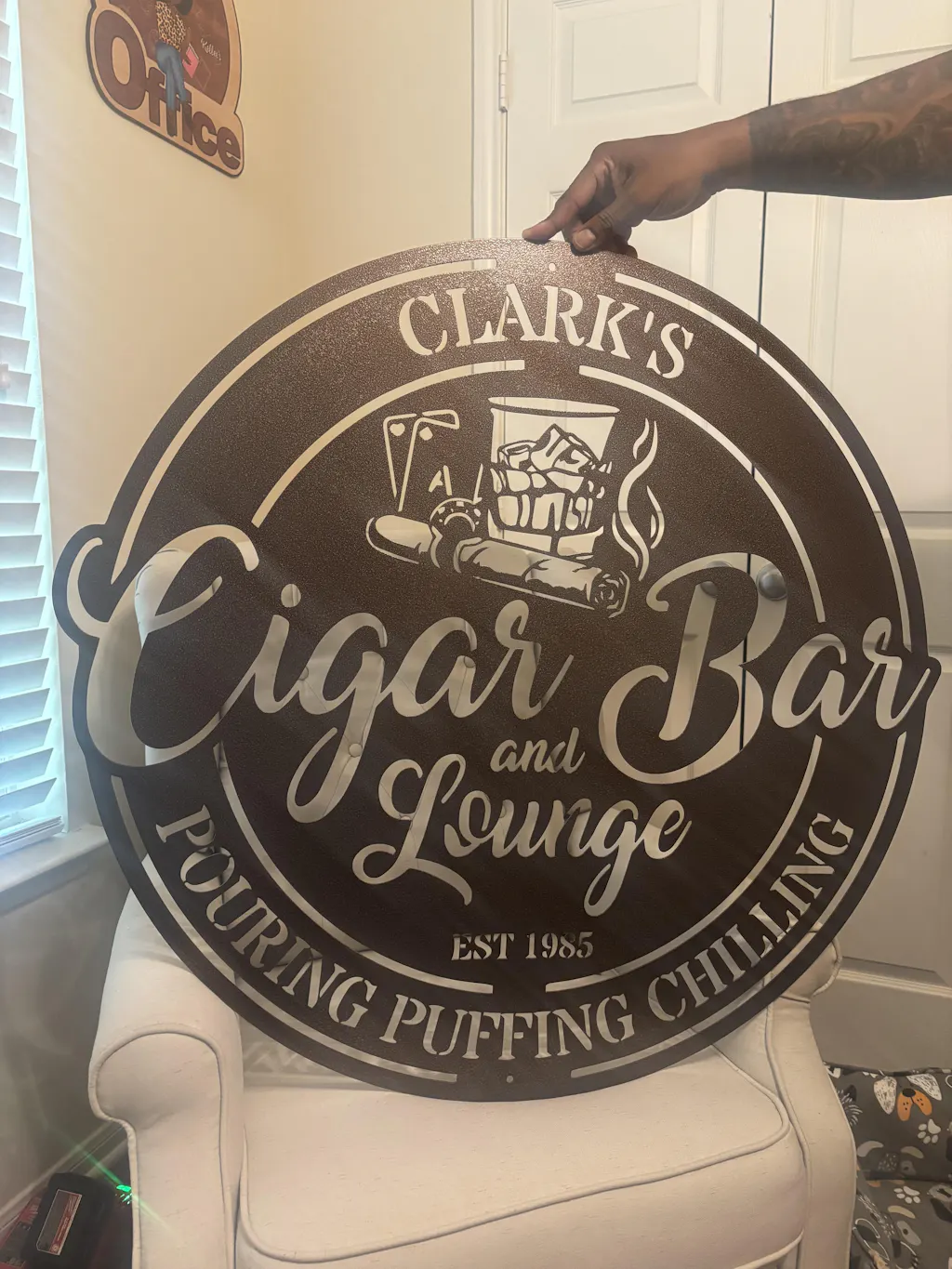
Paper posters don't survive a room where people smoke and pour. They curl, they fade, and they read as temporary. Cut-through steel doesn't do any of that. Ours is 16-gauge, powder-coated, made in the USA, and it hangs like it was always supposed to be there.
Name the room while you're at it. A Bourbon Bunker sign or a Whiskey Den sign with your last name cut into the steel turns a spare bedroom into a place with an identity. If you'd rather skip the naming and go straight to atmosphere, the Personalized Distillery Barrel Room piece does the same job with a rickhouse silhouette instead.
Bottles at Eye Level, Glasses Underneath
Standing height, seated height, whichever you use more. That's where the bottles live.
The reason is practical before it's aesthetic. A shelf above your sightline means you're reading labels upside down and reaching blind for a bottle that costs real money. A shelf below your knees means you're crouching every pour. Neither is a good look at eleven at night.
Put the open bottles at eye level, the backups below, and the glassware on the lowest shelf where a knocked-over Glencairn falls six inches instead of four feet. Leave gaps. A shelf packed edge to edge looks like inventory. A shelf with breathing room looks like a collection.
One more thing: don't line them up by height. Line them up by how often you reach for them.
Light It Like a Bar, Not a Bedroom
The single biggest difference between a spare room and a bourbon room is the ceiling fixture, and the fix is to stop using it.
Kill the overhead. Put a warm 2700K lamp on the side table, a picture light or a small puck over the wall art, and an LED strip tucked under the top shelf so the bottles glow from behind. Everything on a dimmer if you can manage it. Three low sources beat one bright one every time.
You'll notice it immediately. Amber whiskey looks like amber whiskey under warm light. Under a bedroom fixture it looks like apple juice.
Sit Down and Test It
Buy the chair before you buy anything decorative. Sit in it for an hour with a pour and a book, and see what's wrong.
Usually it's the table. You want something at armrest height within easy reach, big enough for a glass, a coaster, a bottle, and an ashtray if that's your thing. A 20-inch side table does it. A giant coffee table across the room does not, because you'll get up for every sip and eventually you'll stop coming in here.
Two chairs, not four. A bourbon room is a two-person conversation with occasional guests, not a waiting area.
What to Skip
Neon beer signs, unless the beer means something to you. A mini fridge you'll open twice a month. A dartboard in a room where people are holding glass. Wall-to-wall barrel staves. A rug so pale that one spilled Old Fashioned ends its career.
And skip the full bar build for now. A bar cart or a console table with a shelf underneath handles ninety percent of what a built-in does, costs a fraction, and moves when you change your mind. Build the permanent thing after a year of knowing how you actually use the room.
The Weekend Version
If you want this done in two days: Saturday morning, clear the room and paint the commit wall something dark. Charcoal, deep green, oxblood. Saturday afternoon, hang the shelves and the steel. Sunday, move in the chairs, the cart, and the lamps, then spend the evening rearranging bottles.
That's it. You don't need a contractor, a permit, or a basement. You need one wall you're proud of and a chair you don't want to get out of.
Ready to name your room? The Man Cave Signs collection is where most bourbon rooms start, and the Man Cave, She Shed & His or Her Spaces collection covers the rest of the house while you're at it.