
Whiskey and Cigar Tasting Night: A Host's Playbook
Share
Four people. Three pours. Two cigars. Three hours. That's the shape of a whiskey and cigar night that works, and almost every version that falls apart does it because somebody doubled one of those numbers.
Bigger groups turn a tasting into a party. Parties are great. This isn't one. The whole point is that everybody at the table is nosing the same pour at the same moment and saying out loud what they're getting. Six people is the ceiling. Four is the sweet spot. Past that, the room splits into side conversations and you've just thrown a regular Saturday with expensive bourbon on the counter.
Here's how to run the night properly.
Build the Guest List Before the Bottle List
Mix experience levels on purpose. A table of four collectors turns into a proof-measuring contest inside of twenty minutes. A table of four beginners has nobody to steer. Two people who know what they're doing plus two who are curious is the ratio that produces actual conversation.
One more rule: invite people who are comfortable saying "I don't get any of that." Tasting notes are a group activity, not an exam, and the fastest way to kill a room is for one guy to announce leather and dark cherry before anyone else has taken a sniff.
Three Pours, Poured in the Right Order
Three is enough. Palates get tired, cigars pile smoke on top, and by the fourth pour nobody's nose is telling the truth anymore.
Sequence matters more than the bottles. Go lowest proof to highest, and lightest to boldest. A wheated bourbon at 90 proof, then something high-rye in the low hundreds, then a barrel-proof finisher. Whatever you build, the night should climb. Start at the top and everything after it tastes like water.
Pour an ounce, not two. People will ask for more of whatever they liked, and that's the good ending. Put a small pitcher of room-temperature water on the table for adding drops, plus a glass of water per person for drinking. Those are two different jobs and they need two different vessels.
Neutral glassware keeps things honest. Glencairns if you have four of them, ordinary rocks glasses if you don't. Nobody has ever left a tasting night complaining about the stemware.
Two Cigars, Chosen to Stretch
Here's where hosts get greedy. Six cigars in a humidor bag feels generous. In practice it means half of them get lit, abandoned, and relit, and a relit cigar tastes like an ashtray apologizing.
Two per person, smoked back to back across the evening. Pick a mild-to-medium Connecticut or Ecuadorian wrapper first, then a maduro second. That order matches the whiskey climb, and the contrast between the two is the actual lesson of the night. Sizes in the robusto and toro range give you 45 to 75 minutes each, which is exactly the runway you want.
If your crowd is new to cigars, say the quiet part out loud early: you're not inhaling, you're drawing smoke into your mouth and letting it go. Half the people who think they hate cigars just did it wrong once. Our cigar and bourbon pairing starter map has the full matchup chart if you want to get specific.
Set the Room Before Anyone Knocks
Airflow first. A window cracked on one side of the room and a fan pulling toward another opening beats any candle or spray you can buy. Smoke needs somewhere to go or it settles into the upholstery and stays for a month.
Then lighting. Overhead lights are the enemy. Lamps, sconces, anything low and warm. You want people leaning in over their glasses, not squinting under a ceiling fixture.
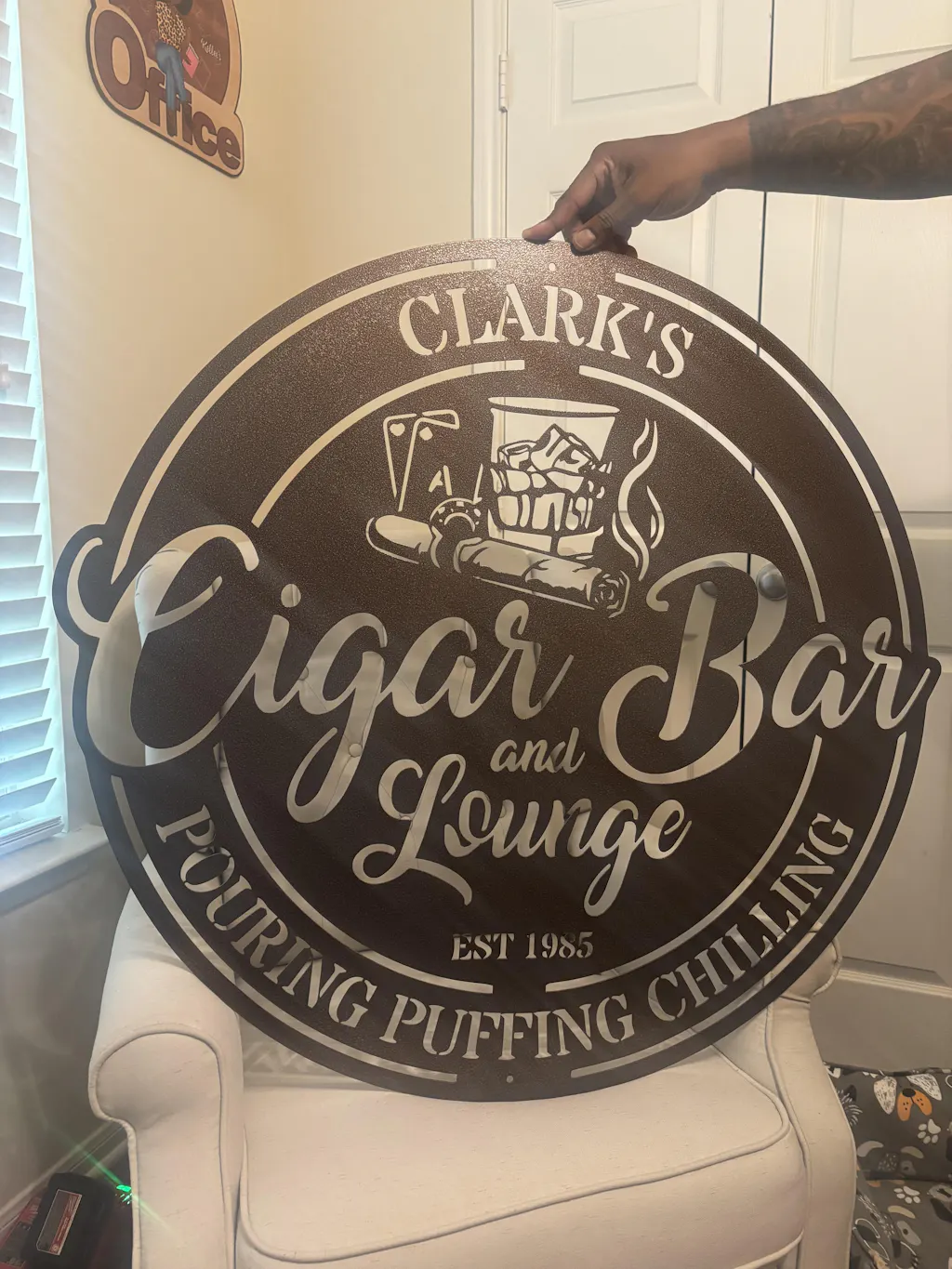
Then the walls, which is where most home setups quit too early. A tasting corner with bare drywall behind it feels like a conference room with better drinks. A single steel sign fixes it faster than any other move in the house. A personalized cigar bar and lounge sign with the host's name cut into 16-gauge American steel does the thing a framed print can't: it tells everyone who walks in that this room has a purpose. Powder-coated, made in the USA, and it'll outlive the humidor. Browse the Man Cave collection →
Seating should let everyone see everyone. A round table, or four chairs pulled into something close to a circle. Straight lines make tastings feel like a lecture.
Feed Them, Barely
Salted nuts, dark chocolate, hard cheese, maybe some cured meat. That's the list. Heavy food coats the palate and flattens every whiskey after it, and a full dinner turns the night into a dinner party that happens to have cigars.
Serve something small an hour in, when the second cigar gets lit and people need a reset. Water and plain crackers between pours do more good than anything fancy.
Host the Night, Don't Teach It
Say a sentence about each pour when you set it down. Where it's from, what's in the mash bill, what to watch for. Then stop talking and let the table work.
Keep two things moving: everyone's glass and everyone's comfort. Somebody's cigar goes out, hand them a lighter without making it a moment. Somebody's not loving the high-proof pour, splash a little water in it. Nobody ever remembers the tasting notes six months later. They remember whether the room felt good.
Let it run long. The best stretch of these nights is usually the last forty minutes, after the structure dissolves and people are just sitting there with a finger of something and a cigar burning down.
If you want the whiskey-only version of this, our tasting night guide covers the pour-only format start to finish.
Four people. Three pours. Two cigars. Get those numbers right and the night mostly hosts itself.